
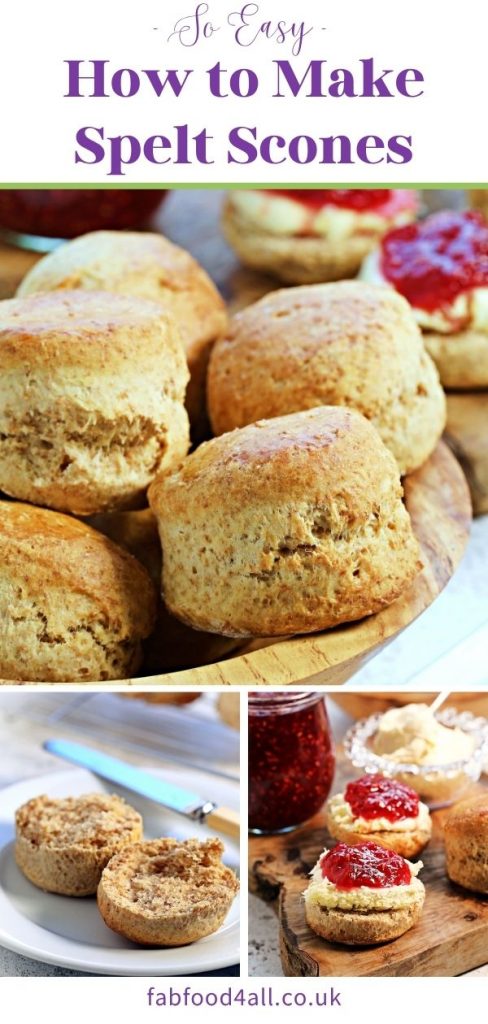
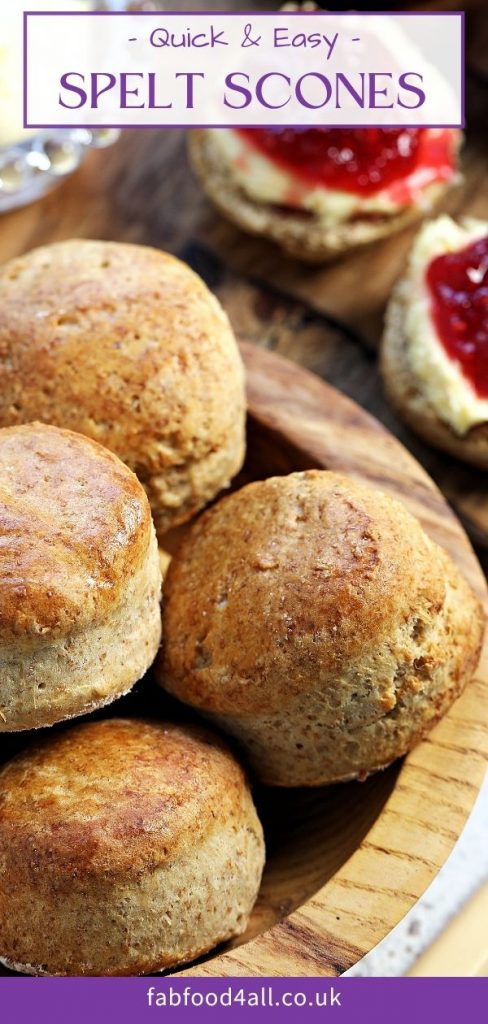
Learn how to make these quick and easy Spelt Scones with a mix of white spelt and wholemeal spelt flour. Tastier than white scones, spelt flour has a subtle nuttiness plus the added benefit of dietary fibre (particularly in the wholemeal spelt flour).
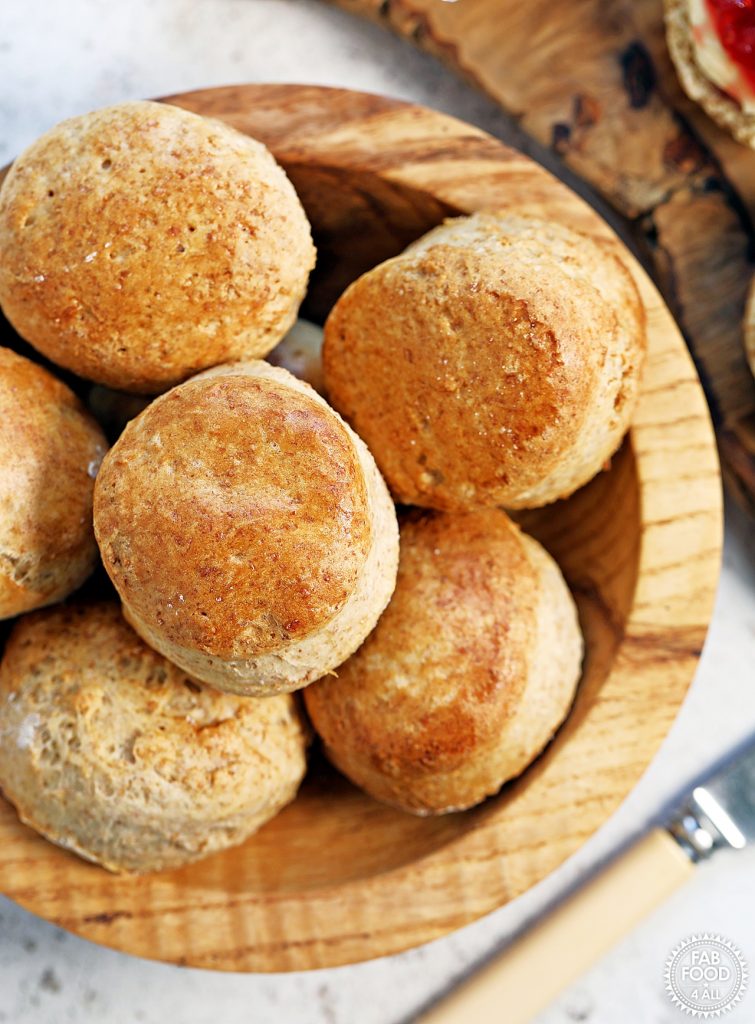
Background to this Spelt Scones Recipe
We love a cream tea in the summer months with my homemade jams.
When it comes to making scones, I’ve always used a recipe printed on a Rodda’s tea towel I have.
Recently, my husband asked me why I didn’t make spelt scones as we’re all big fans of this ancient grain for its taste and health benefits.
I toyed with the idea of making purely wholemeal spelt flour scones but decided to add white spelt flour for a lighter scone.
So, using the tea towel recipe as a starting place, I adapted it over a few bakes until I was happy with the result.
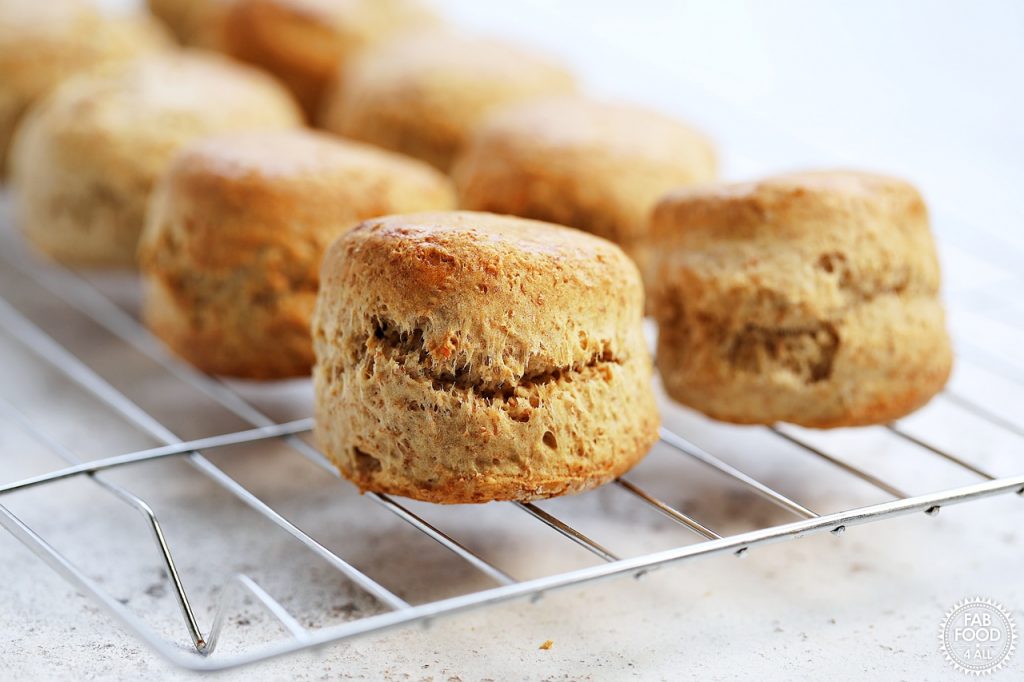
Spelt flour, especially wholemeal spelt flour, doesn’t require as much milk as plain all-purpose flour but does require more raising agent (baking powder).
I also reduced the amount of sugar to less than half. Plus, instead of caster sugar I used soft light brown sugar (Muscovado is my favourite).
Another change I made was to use full-fat milk instead of eggwash to glaze the scones. Eggs are just too expensive to waste in this way, in my opinion, when milk is just as good.
If you want to know what my husband thought about these fluffy scones, he gave them 11/10 and couldn’t stop raving about them. As well as the nutty spelt flavour, he loves that there was no aftertaste of raising agent, which you often get with white scones.
In fact, the whole family love these spelt scones and have had many a cream tea while I’ve been perfecting the recipe. It’s a hard life:-)
How to Make Spelt Scones
See the recipe card at the bottom of this page for the full instructions.
Ingredients
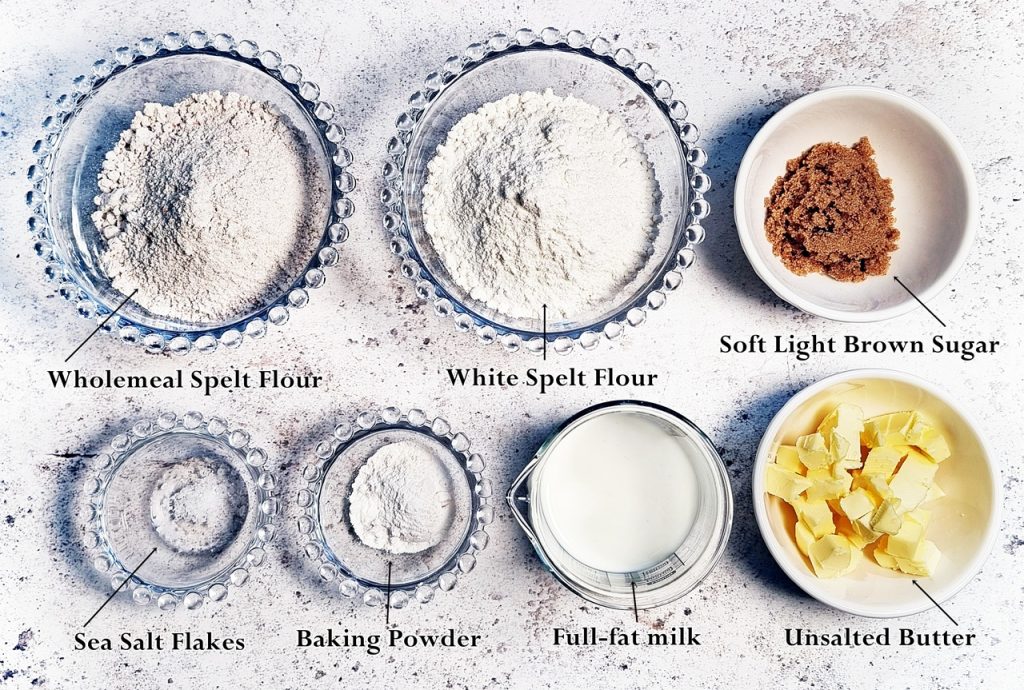
- White Spelt Flour: I use Doves Farm organic.
- Wholemeal Spelt Flour: Again, I use Doves Farm organic.
- Baking powder: Make sure it’s in date and has been stored with a firmly fitted lid for best results.
- Unsalted Butter: Chilled and cut into small cubes.
- Light soft brown sugar: I use light brown muscovado for extra flavour.
- Salt: I use Maldon Sea Salt flakes and crush them between my fingers before adding. Rock salt is not as flavoursome (as my family noted), and definitely don’t use table salt.
- Full-fat milk: I prefer organic, and full-fat milk contains more nutrients, so it’s better for you.
Equipment
- Small baking sheet/tray: allows the scones to fit snugly and brown more easily.
- Medium/Large bowl: glass, ceramic or metal.
- Sieve: I prefer a metal sieve.
- Whisk: any size.
- Worktop saver (or use your counter). I used a plastic board (prop) for the photography but wouldn’t usually use plastic.
- Cookie Cutter: 5cm in diameter or bigger if you want larger scones.
- Pastry brush: silicone or wooden.
- Palette knife: stainless steel.
Method
- Lightly grease a small baking tray and preheat the oven to 220°C, 200°C fan, 425°F or gas mark 7.
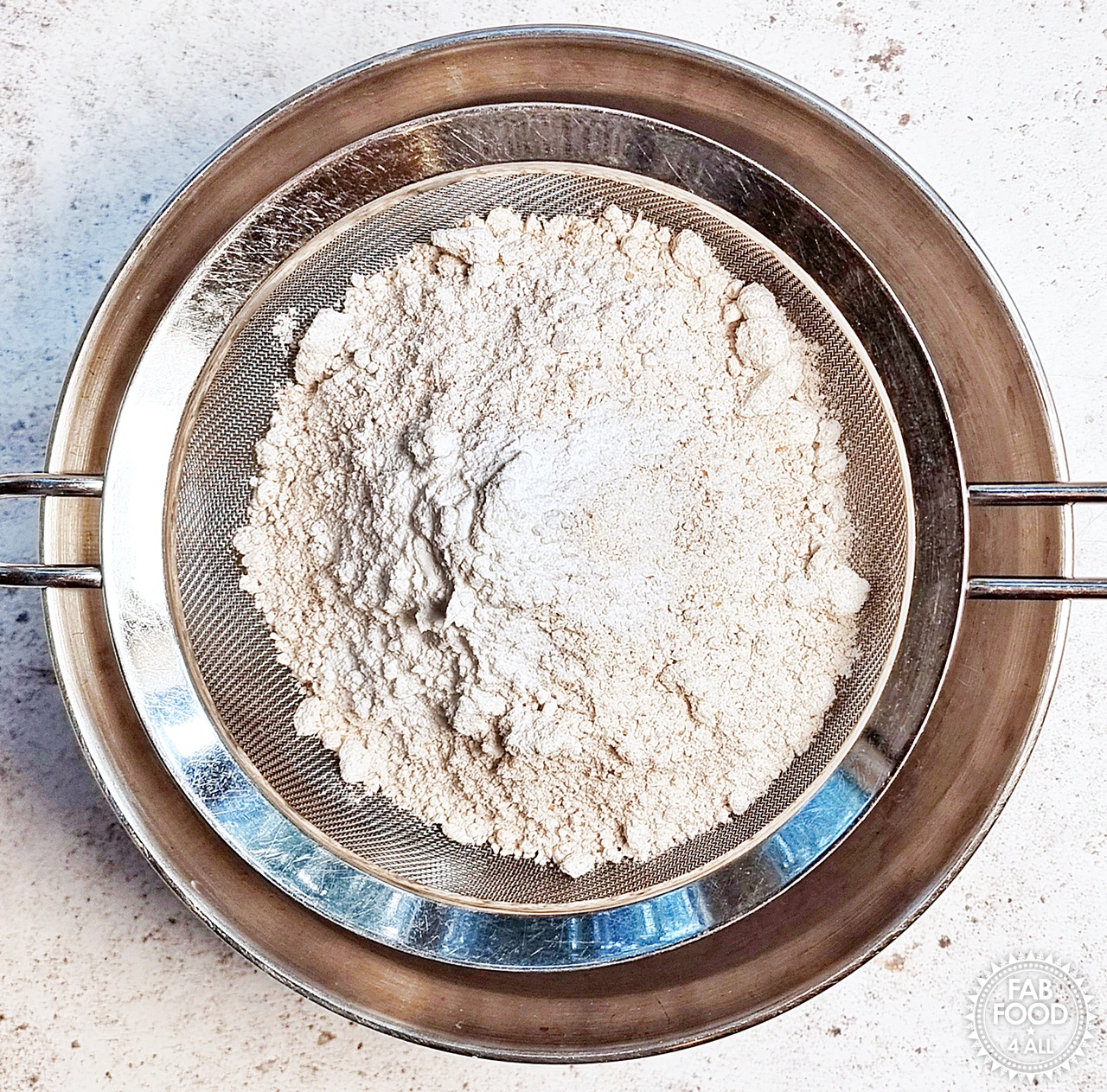
- Measure the white spelt flour, wholemeal spelt flour, and baking powder into a sieve over a large mixing bowl.

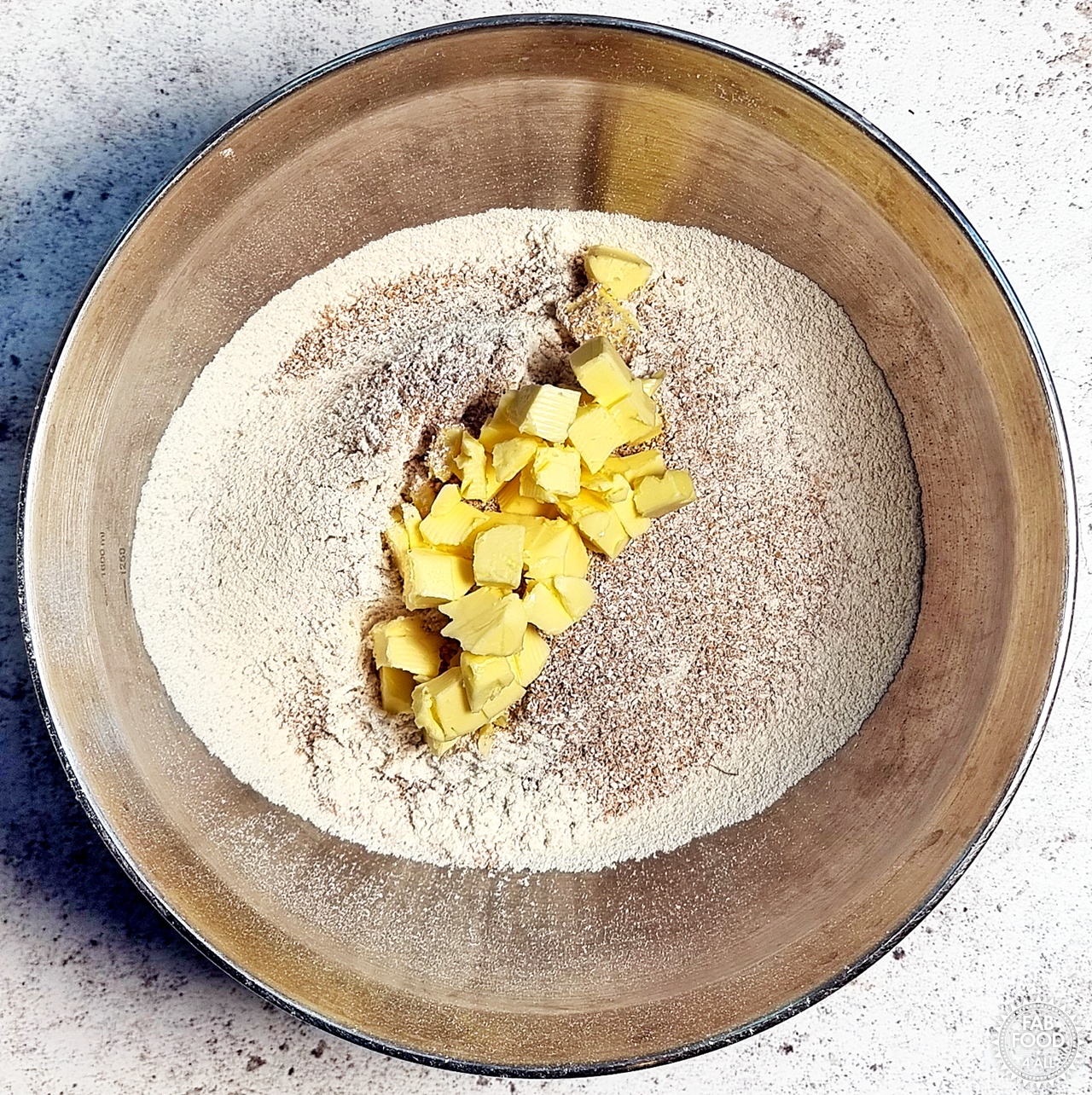
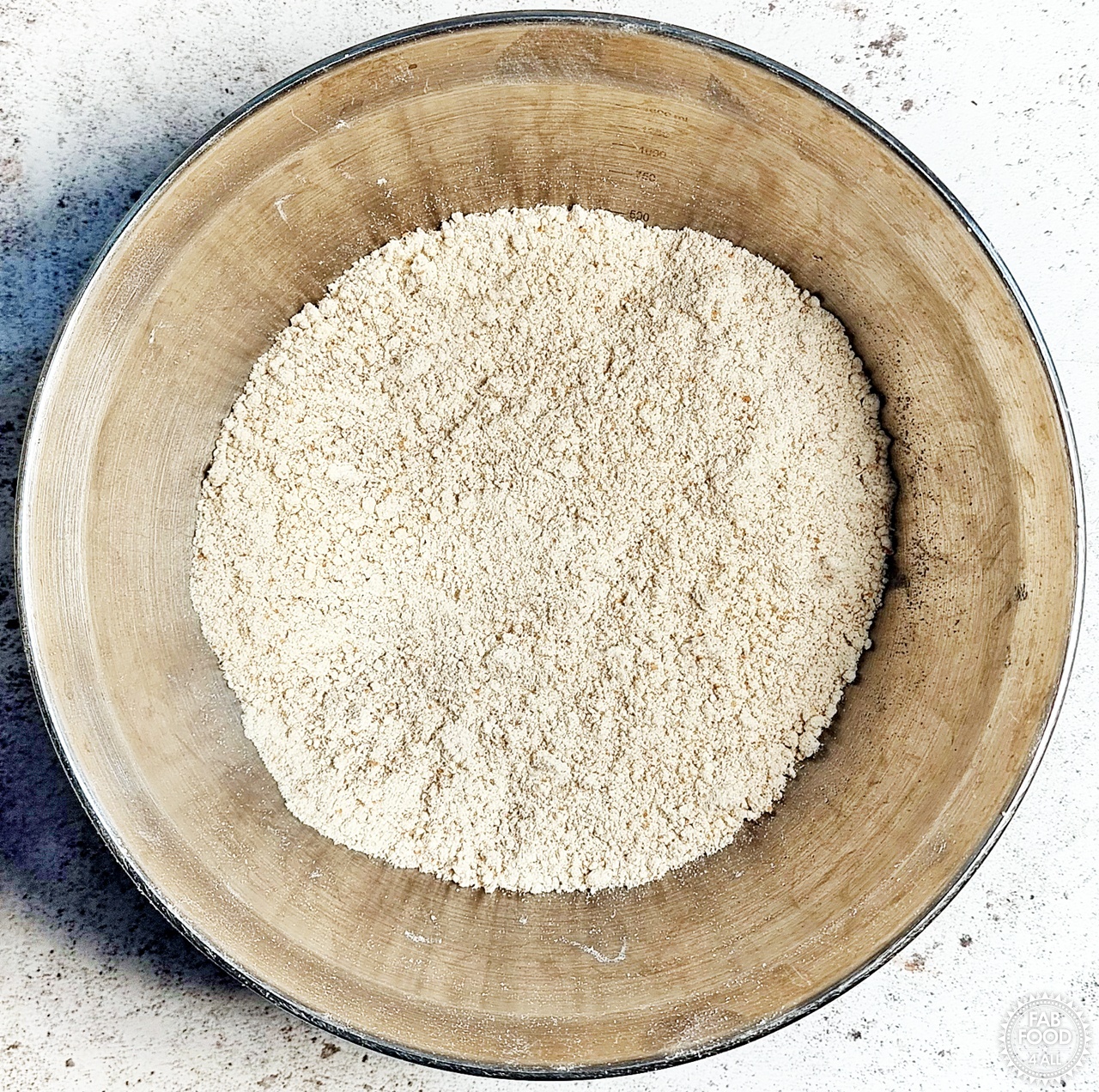
- Add the cubed cold butter to the flour mixture and rub in with your fingertips until the mixture resembles fine breadcrumbs.
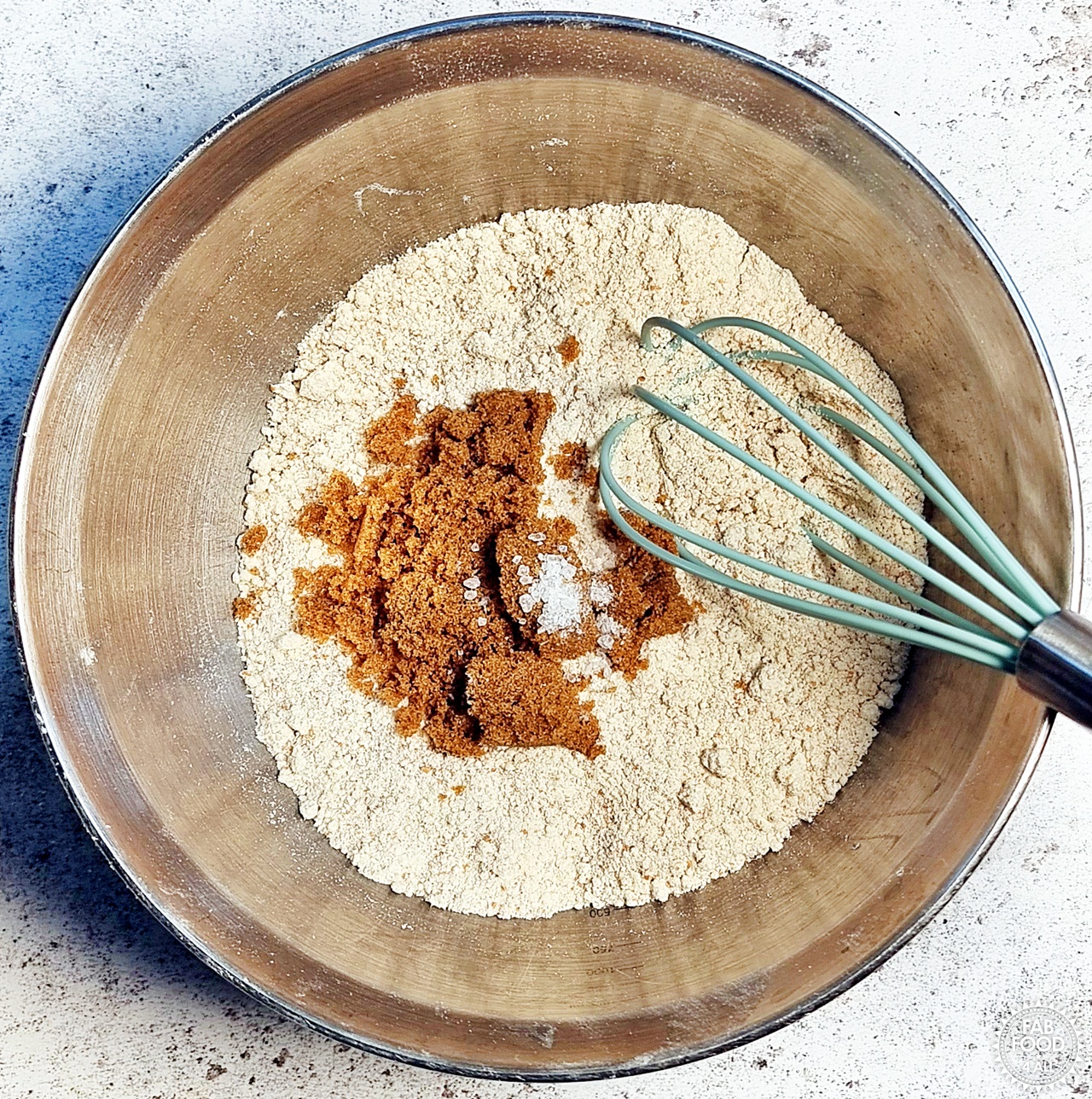
- Stir in the sugar and salt with a whisk.
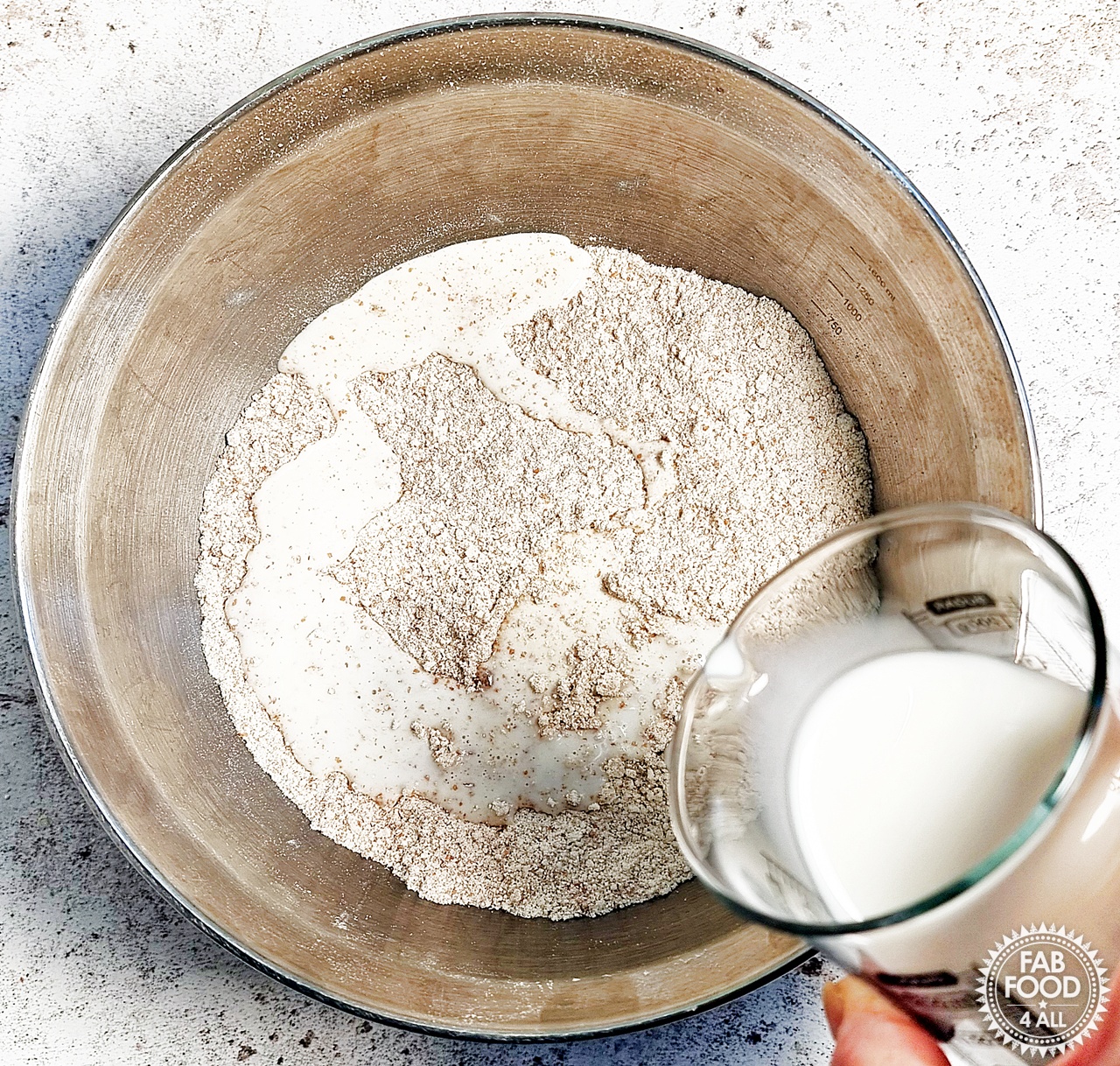
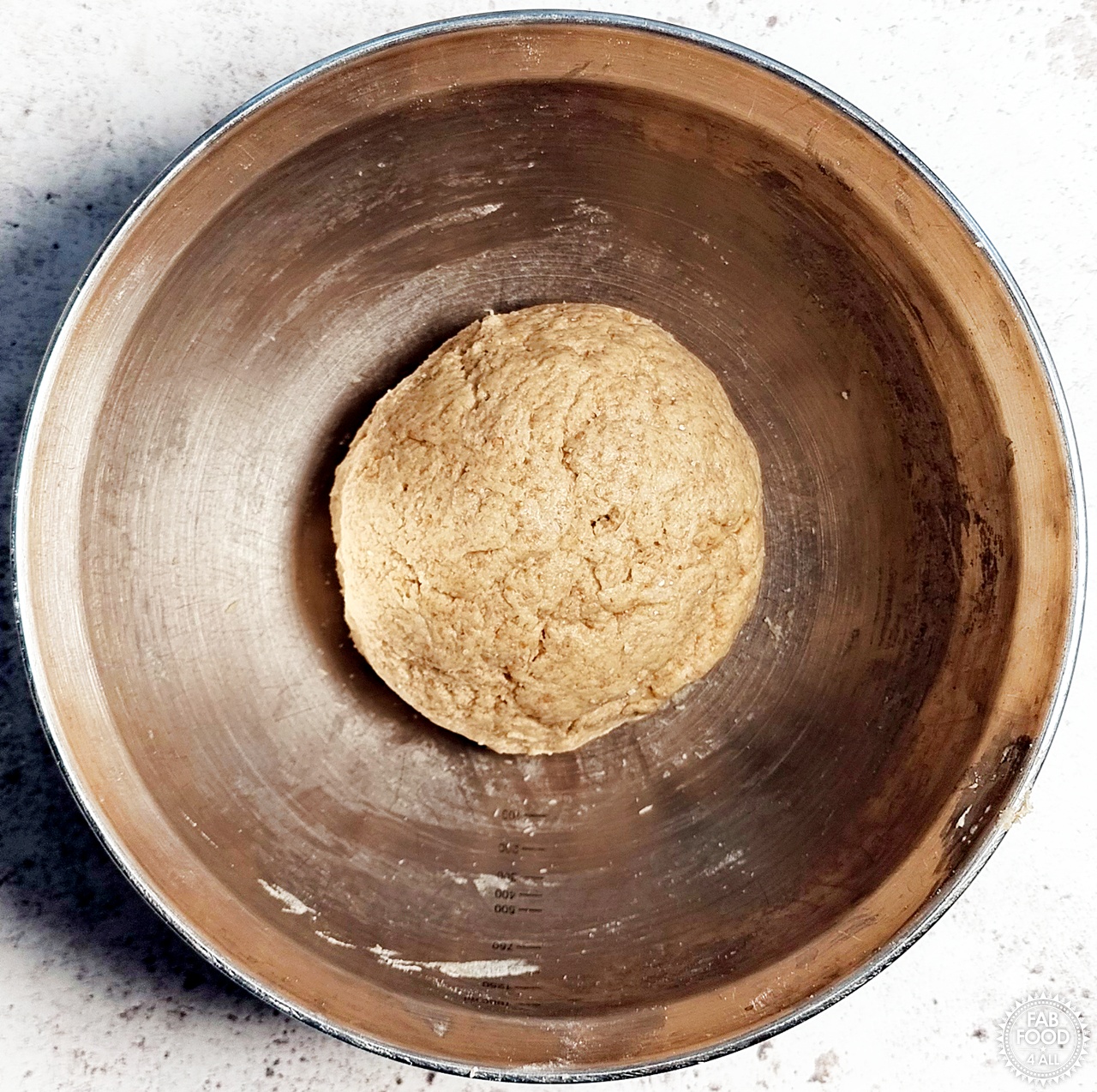
- Add most of the milk, then use your hand to mix and briefly knead until a soft dough forms, adding more milk as necessary.
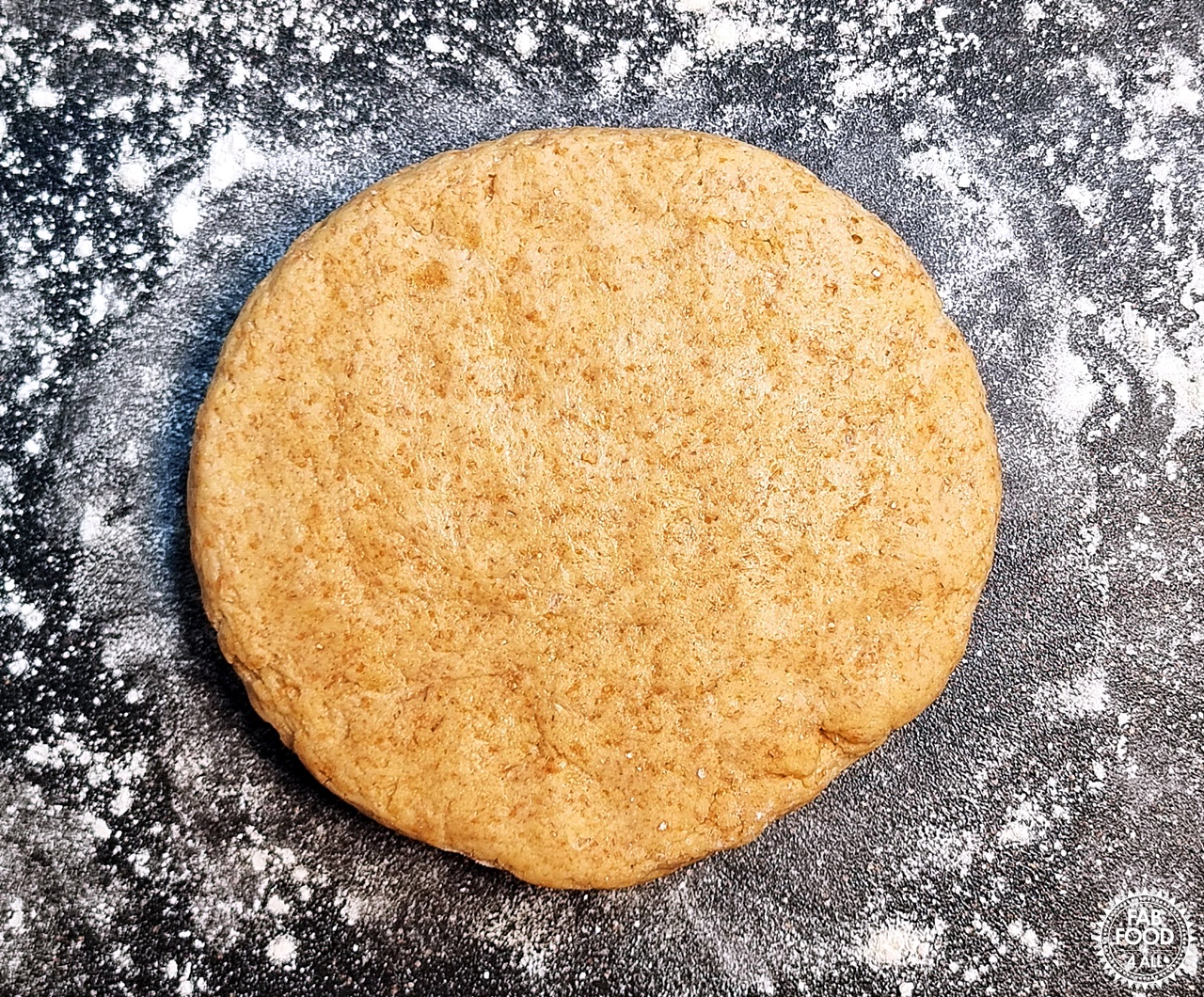
- Tip the dough out onto a lightly floured surface and flatten with your hand to a depth of 2.5cm (1″).
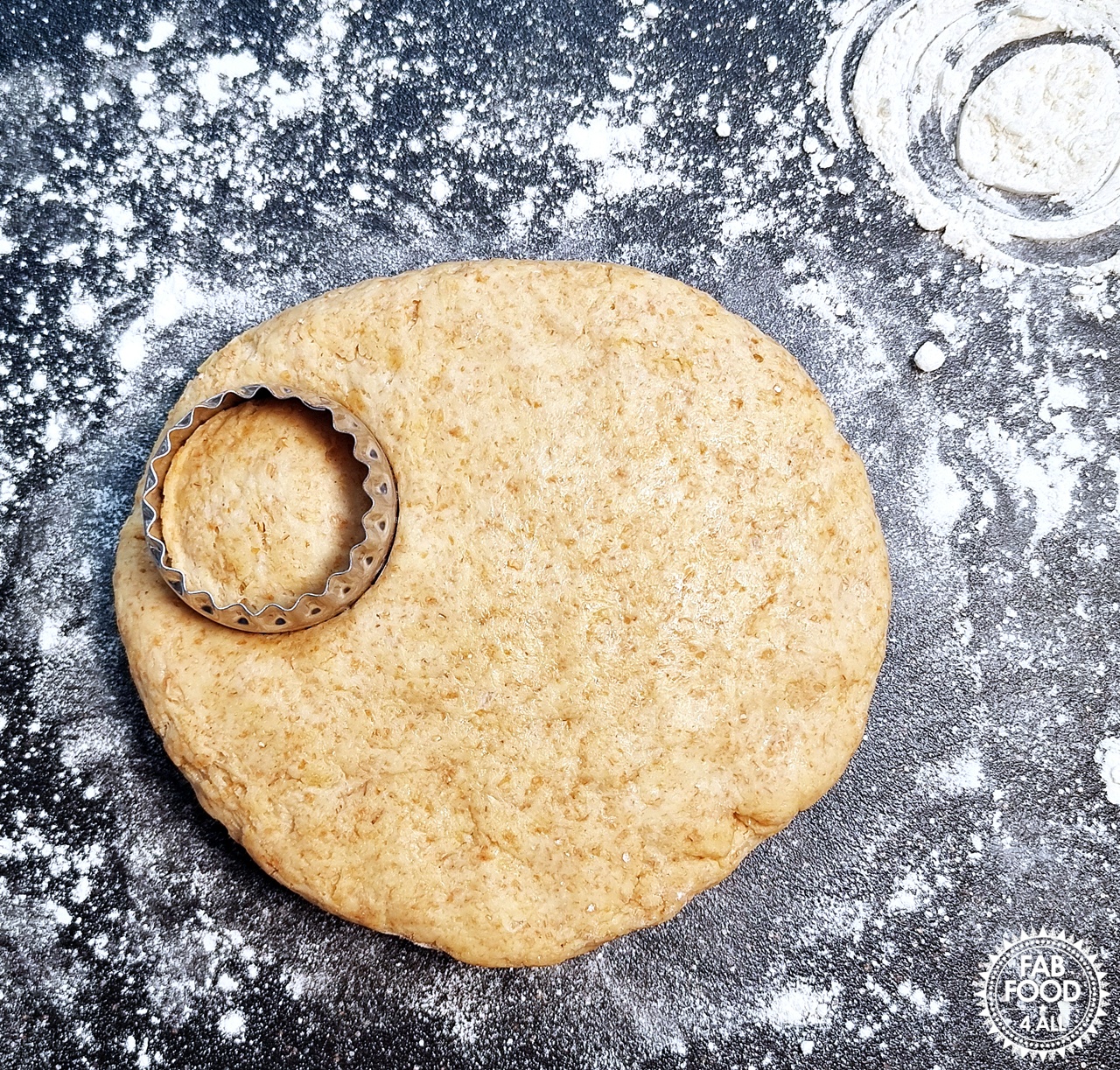
- Use a 5cm cookie cutter dipped in flour to cut out circles with a quick, sharp tap.
- Gather up the remaining dough, press together and repeat until you have used up all the dough. (Should make 10 scones).
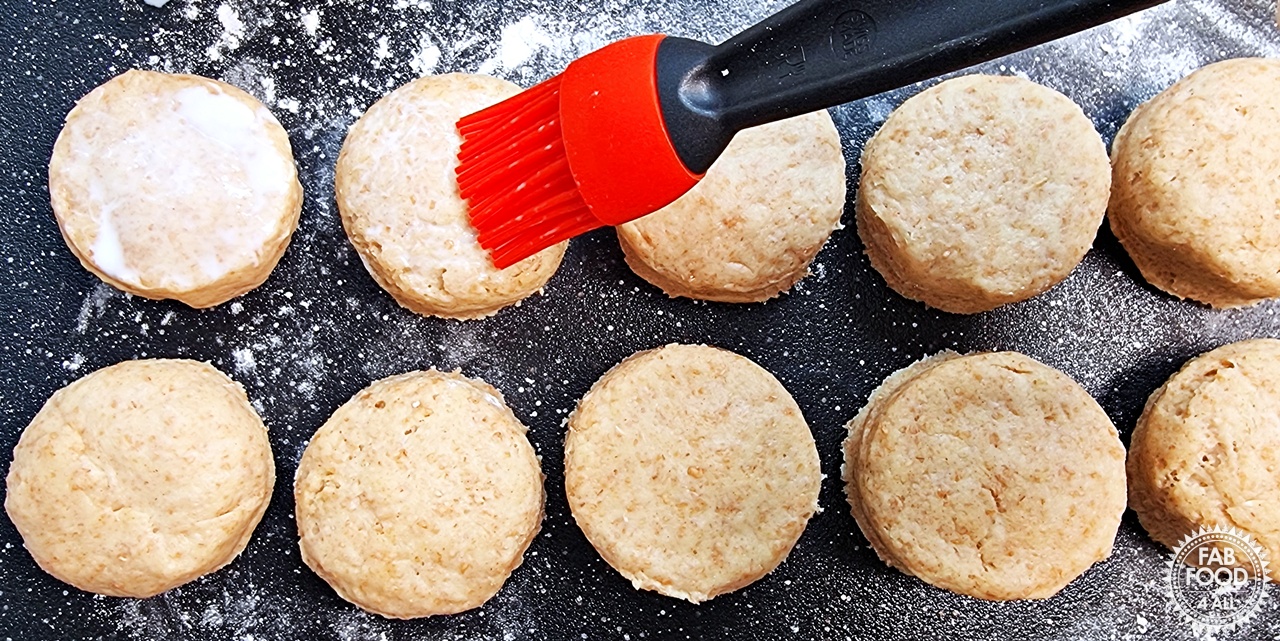
- Brush the tops of the scones with full-fat milk.
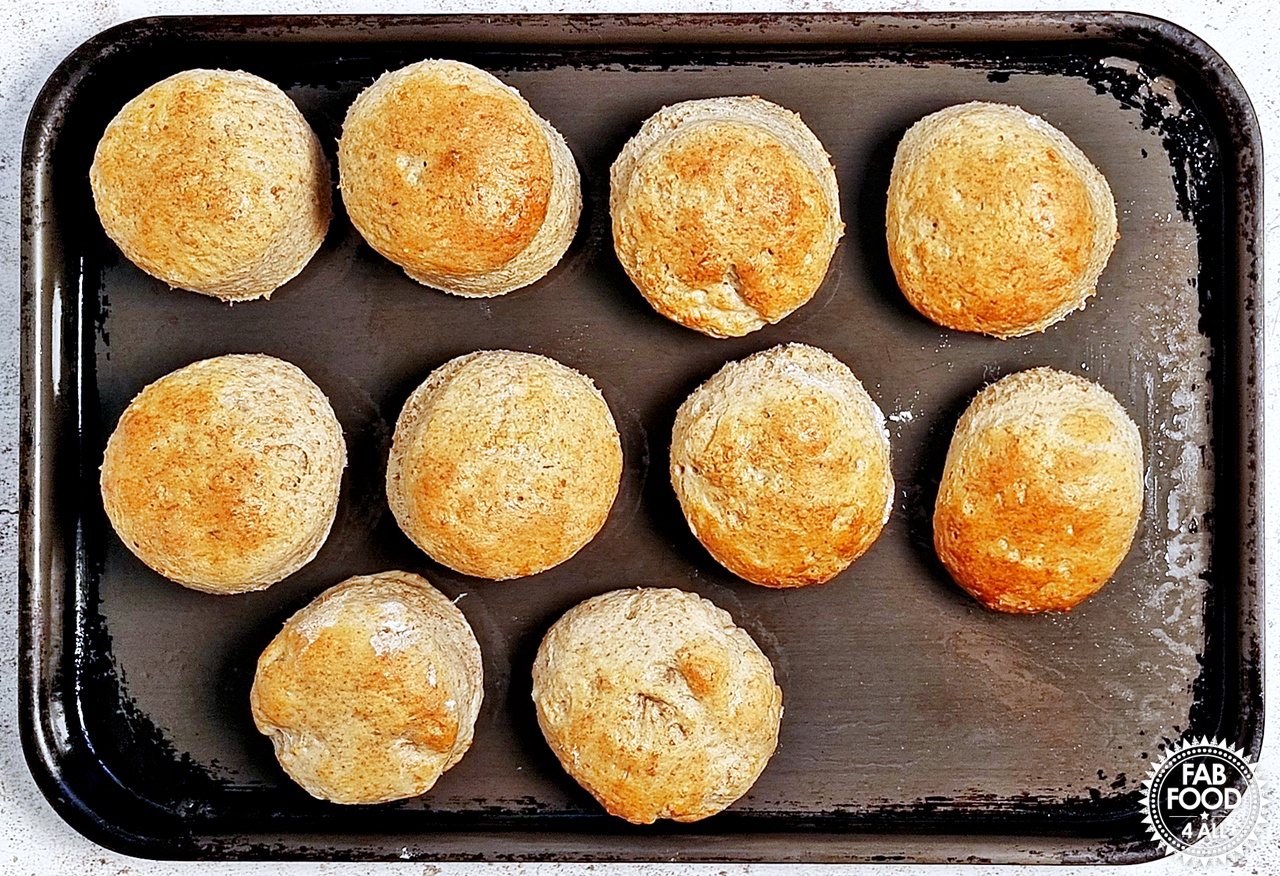
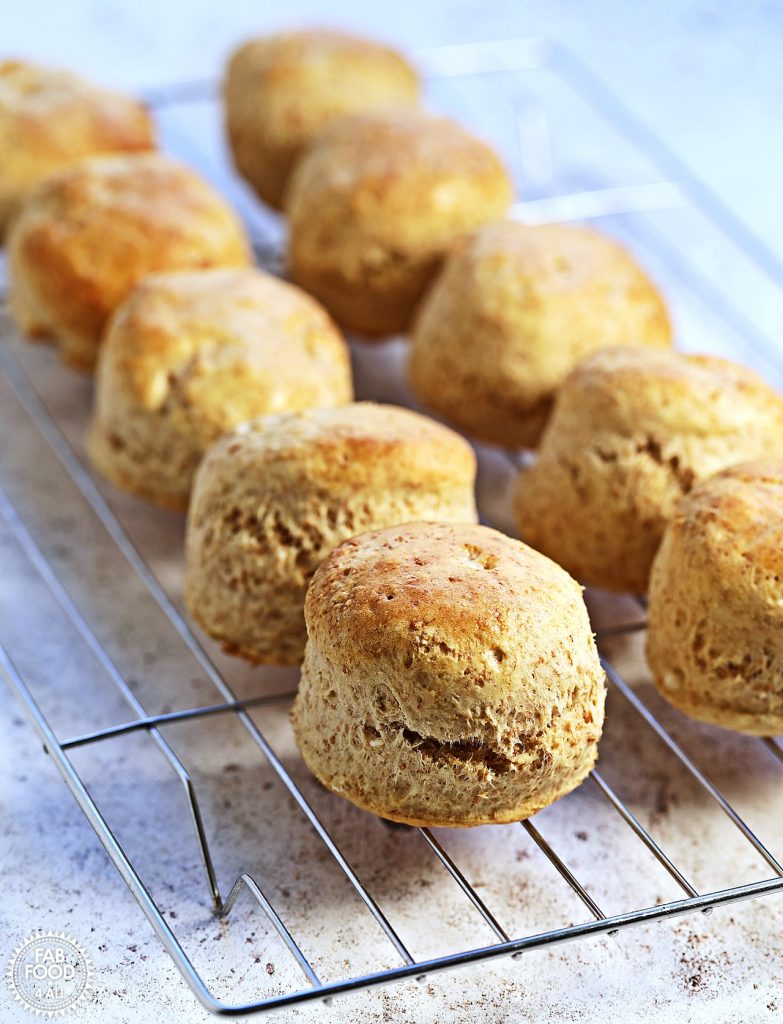
- Transfer the scones to the prepared baking tray. Bake for 10 – 12 minutes in the top half of the preheated oven until light golden brown.
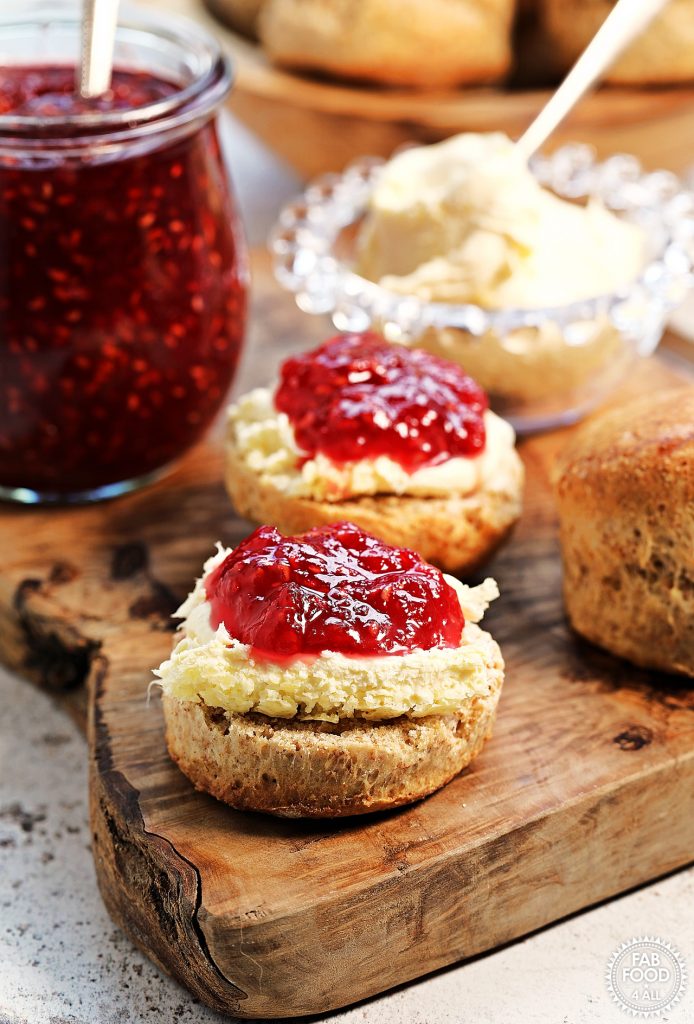
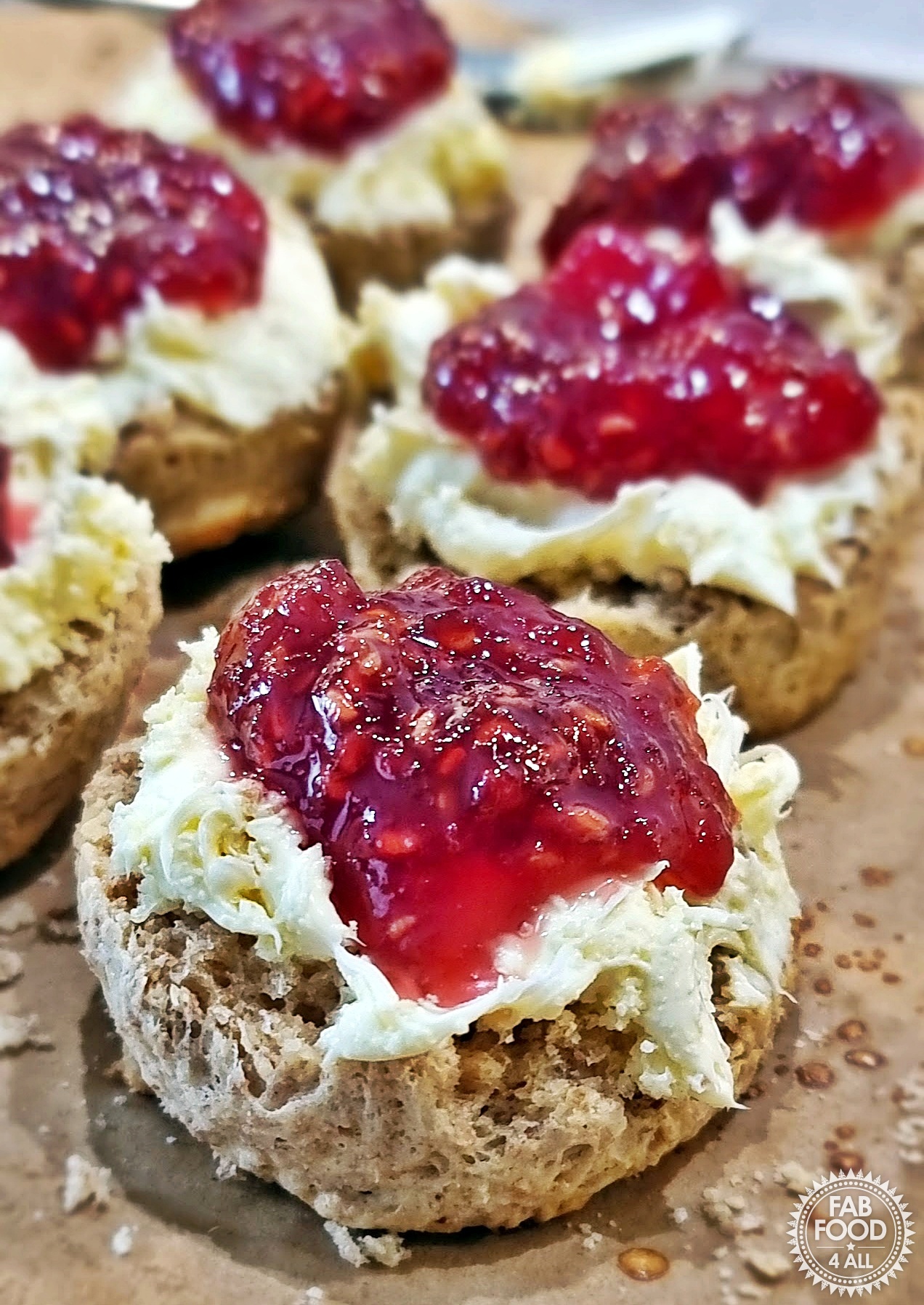
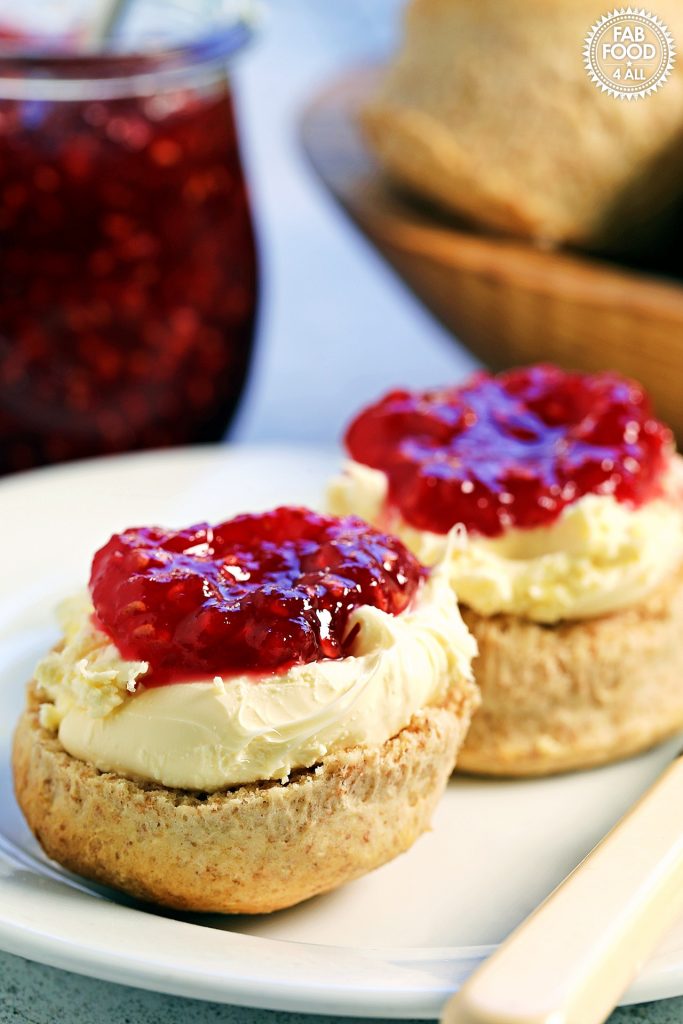
- Serve split with butter or clotted cream and homemade jam.
Substitutions and Additions
- If you don’t have spelt flour, you could use a mixture of white and wholemeal flour.
- If you only have white spelt flour or wholemeal spelt flour, then use the one that you have. You may need to add all or a little more milk if using just white spelt flour.
- There are many additions you can make to scones, not all wise and certainly not traditional, e.g. icing sugar glaze anyone? No, me neither! However, I think these spelt scones would pair well with chopped dates and walnuts.
- If you’re trying to cut back on sugar, then you can leave it out of the recipe.
Storage
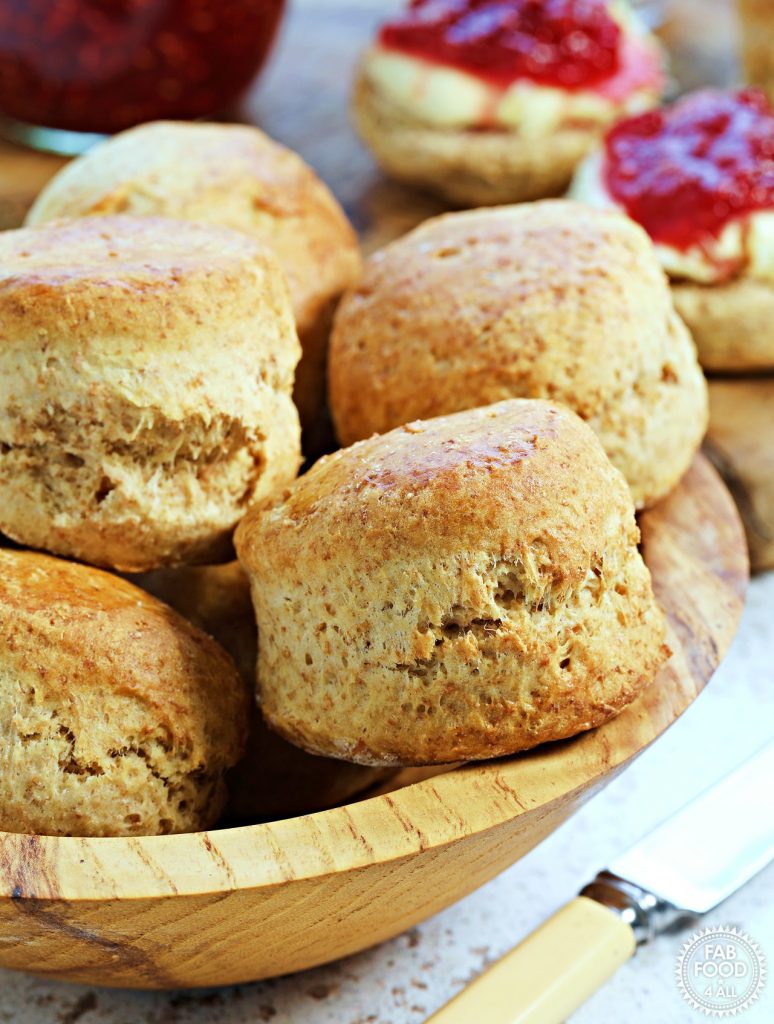
Store any leftover scones in an airtight container where they will keep for 2 days.
Alternatively, you can freeze scones in a freezer bag, being sure to remove excess air. They will keep for 1-2 months.
To use, thaw for an hour at room temperature.
Reheating Scones
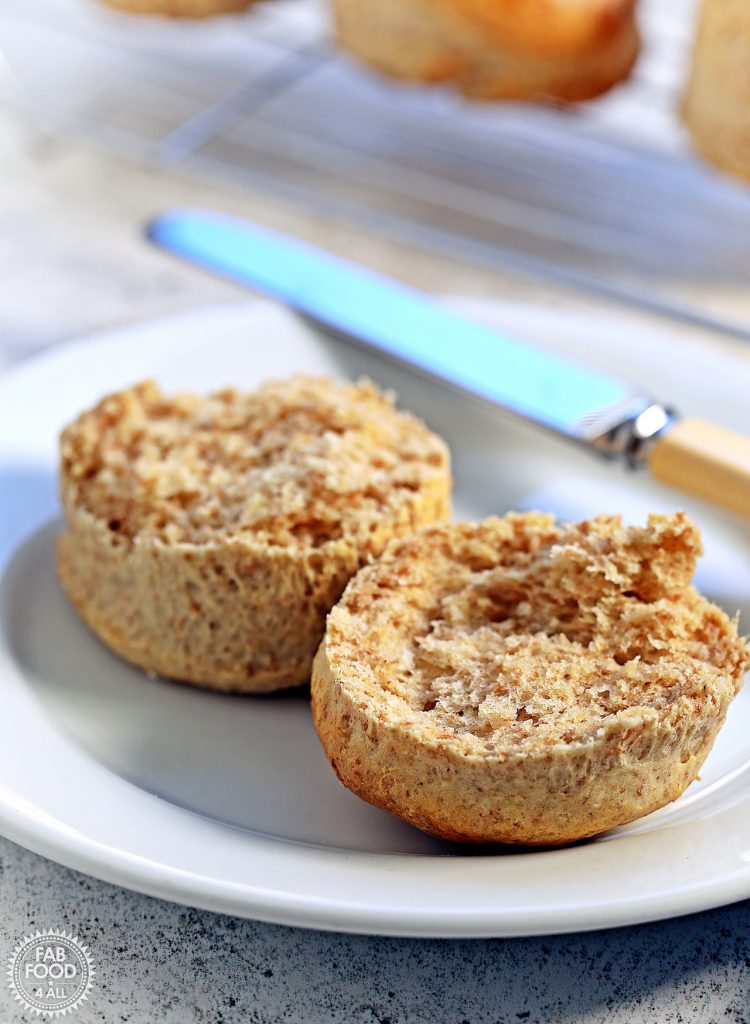
You can eat scones cold or reheat them in the oven or an air fryer. However, I find it simpler to split and toast them in the toaster or under the grill (broiler) if I’m doing a large number.
Tips for Great Scones
- Relax and don’t overwork your scone mixture or dough, or the result will be heavy, dense scones.
- Always use cold butter straight from the fridge, and if your hands are hot, run them under a cold tap before rubbing in/kneading. You don’t want the butter to melt, as again it will result in dense scones.
- Don’t overbake your scones. The scones will be baked after 10 minutes but will be more evenly golden at 12 minutes. Do not be tempted to bake for longer or they will become too dry.
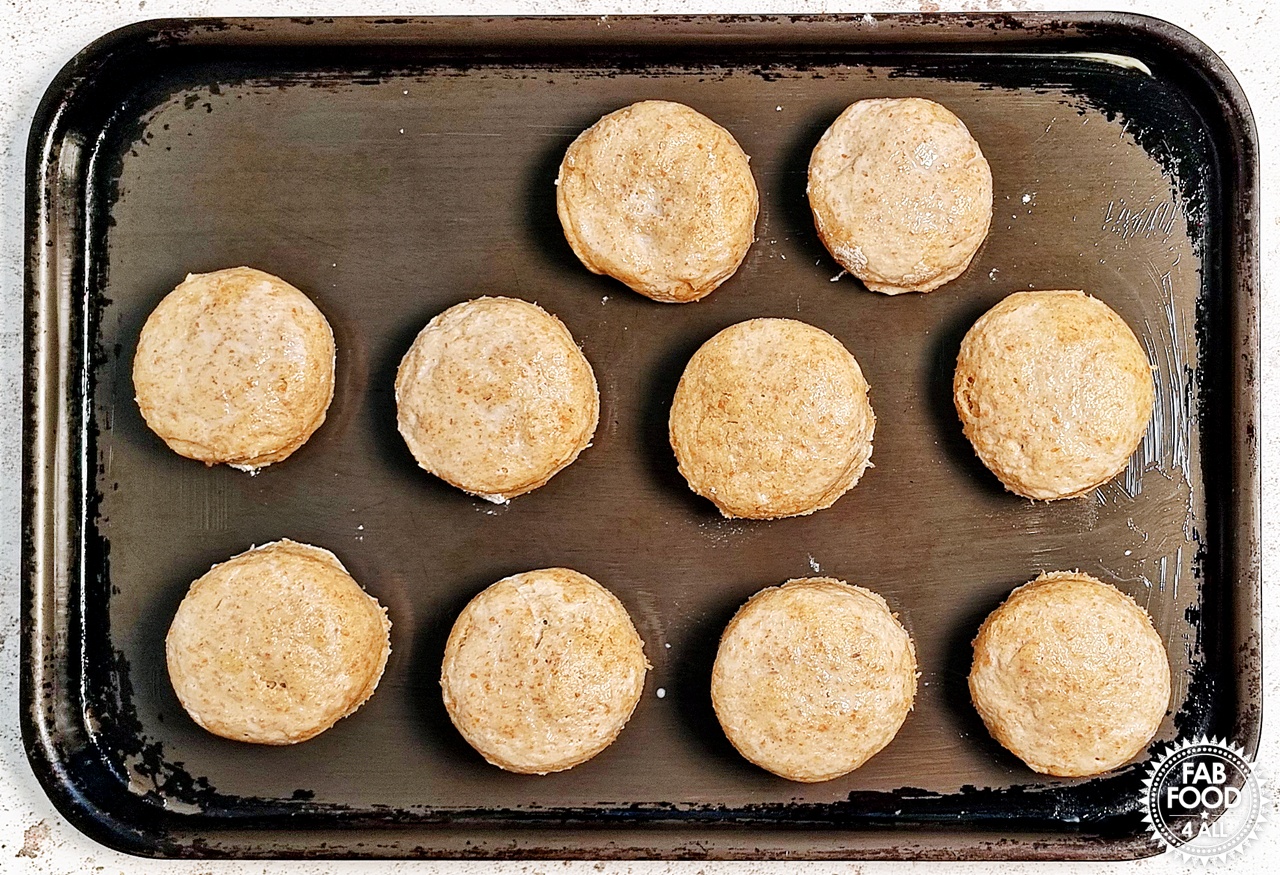
- Placing the scones close together on the baking tray will force them upwards and prevent them from spreading. (Mine were not as close as they could have been).
Serving Suggestions
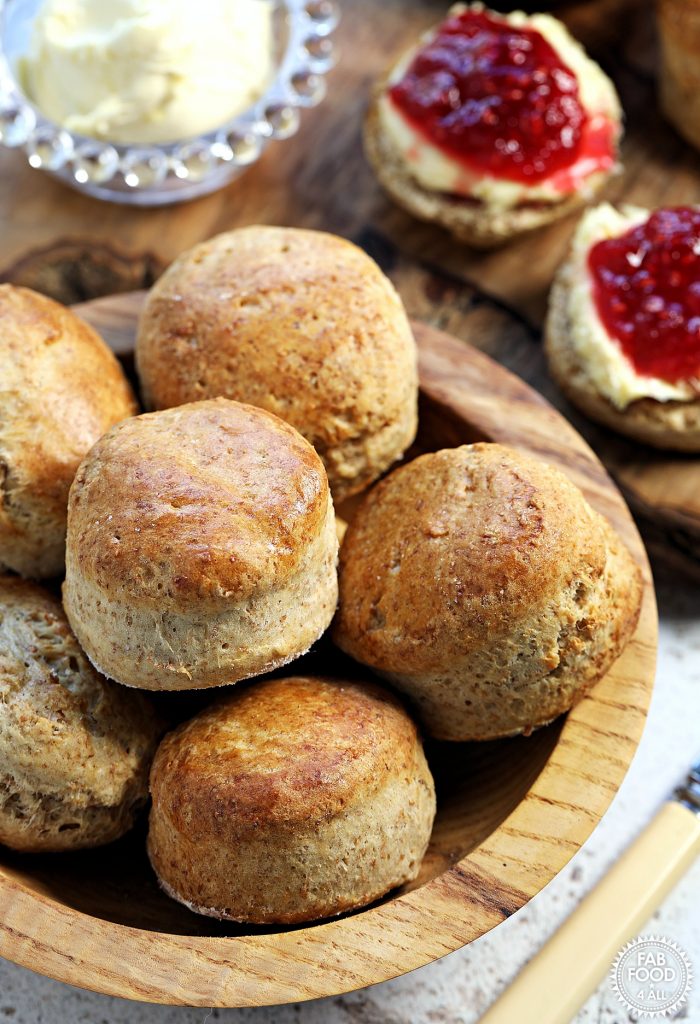
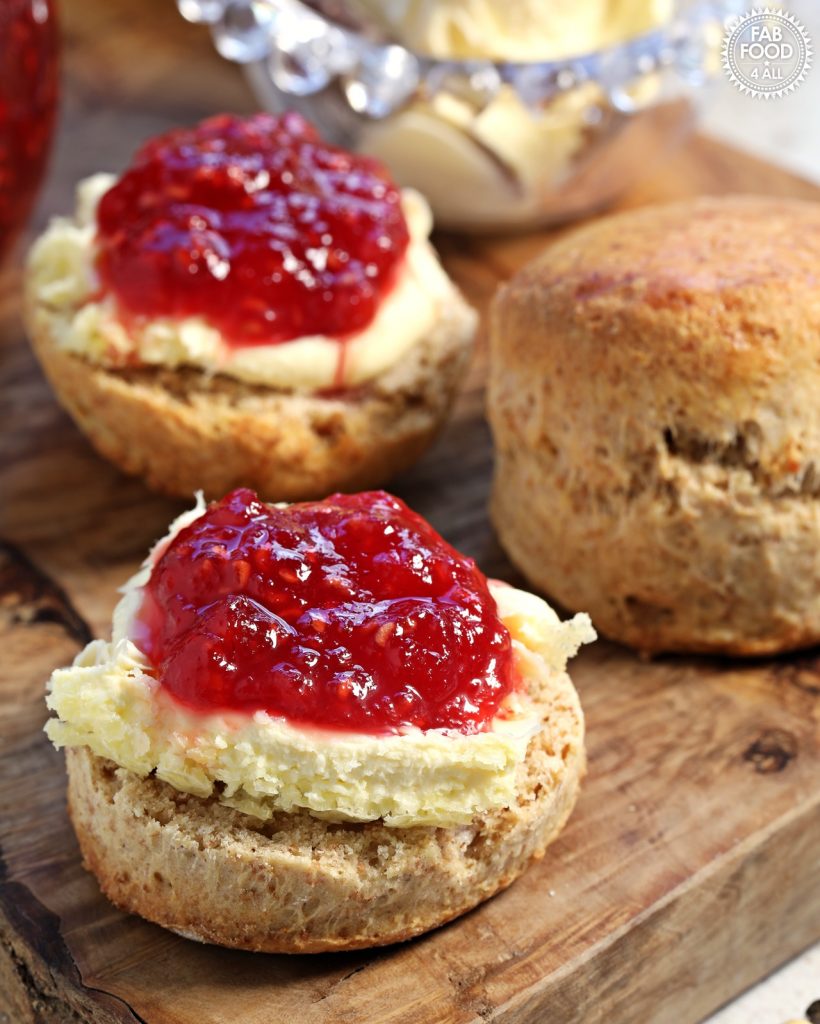
These spelt scones are perfect for a cream tea (with jam and clotted cream if you’re not familiar with this British tradition).
If you can’t get hold of any, did you know you can make your own clotted cream? Otherwise, whipped double cream (heavy cream) is the next best thing.
Of course you can also serve spelt scones with just butter and jam!
Here are some homemade jam recipes that would be perfect with these scones:
- Quick & Easy Raspberry Jam (as per photos)
- One Punnet Strawberry Jam
- Strawberry & Gin Jam
- Rhubarb & Strawberry Jam
- Rhubarb & Ginger Jam
- Rhubarb & Gin Jam
- Easy Blackcurrant Jam
- Simple Elderberry Jam
- Easy Blackberry & Apple Jam
- Cherry Jam
- Simple Blueberry Jam
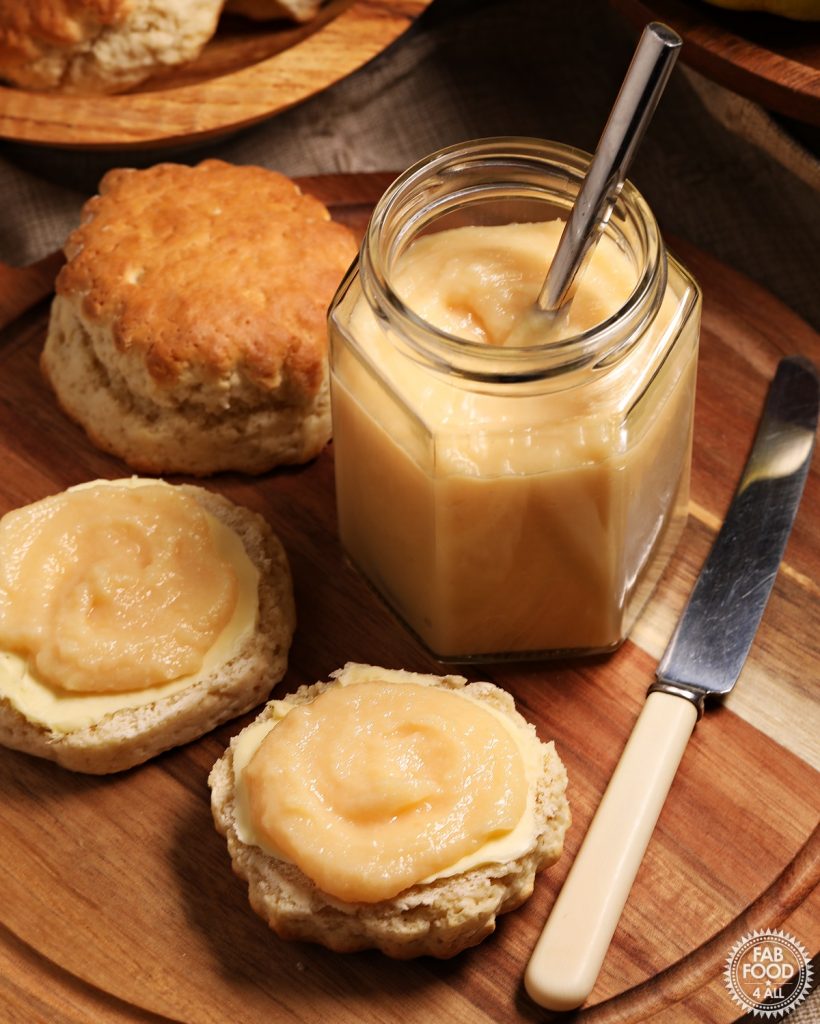
You could also pair these scones with any of my Fruit Curds or Jellies!
Frequently Asked Questions
Yes, you can easily double this recipe; just be sure to use a large sieve, mixing bowl and baking tray.
If you want to make larger scones, then you can use a larger-sized cookie cutter. You may need to add a few minutes to the baking time.
The fibre from the outer husk of the spelt grains cannot absorb milk, so you need less of it.
Spelt flour has a weaker gluten structure than plain flour, so it cannot trap air as easily and the dough gets weighed down. Extra baking powder helps alleviate this.
Many recipes state that you should line a baking tray with parchment paper. However, this is unnecessary and a waste of the planet’s resources and your money. A light greasing with butter or even dusting of flour will suffice.
Once the scones are put in the oven, the butter will melt, leaving behind unsightly holes.
Conclusion
If you love the idea of healthier scones and want a scone recipe worthy of a British cream tea, then this is the perfect recipe for you!
These tasty Spelt Scones are great for special occasions, picnics, or just enjoying with the family for afternoon tea. I’m sure you’ll love them as much as my family does!
Pin Spelt Scones for later:
Spelt Scones
Equipment
- 1 Small baking sheet/tray
- 1 Digital scale
- 1 Medium/large mixing bowl
- 1 sieve
- 1 Whisk
- 1 Worktop saver (or use your counter)
- 1 5 cm Cookie cutter
- 1 Pastry brush
- 1 Stainless steel palette knife
- 1 Wire cooling rack
Ingredients
- 125 g white spelt flour I use organic Doves Farm
- 125 g wholemeal spelt flour organic.
- 1 tablespoon 10 g baking powder
- 50 g unsalted butter cubed, I use organic
- 25 g soft light brown sugar I use Muscovado
- 1 pinch sea salt flakes crushed, I use Maldon
- 120 ml full-fat milk I use organic (as much as needed)
Glaze
- Full-fat milk should have some leftover from the above
Instructions
- Lightly grease a small baking tray/sheet with butter and preheat the oven to 220°C, 200°C fan, 425°F or gas mark 7.
- Place a sieve over a large mixing bowl and set it on the scales before measuring the white spelt flour, wholemeal spelt flour, and baking powder in that order.
- Add the cold cubed butter and rub in with your fingertips until the mixture resembles fine breadcrumbs. (A few slightly larger flecks of butter is fine). Do not overwork this stage or you risk your scones being heavy and dense.
- Stir in the sugar and salt with a whisk.
- Add most of the milk, then use your hand to mix and very briefly knead into a ball of dough (don’t overwork). Add more milk as necessary to incorporate any missed flour. (I used 105 ml).
- Tip the dough out onto a lightly floured surface and flatten with your hand to a depth of 2.5cm (1″).
- Use a 5cm cookie cutter dipped in flour to cut out circles with a quick, sharp tap. Do not twist the cutter or the scones will be mishappened. (I aim to cut 6 circles from the first pressing).
- Gather up the remaining scone dough, press together and repeat until you have used up all the dough. (Should make 10 scones).
- Brush the tops of the scones with full-fat milk (you should have some leftover).
- Use a palette knife to transfer the scones to the prepared baking tray and position them close together to discourage spreading and force straight upwards (you can go closer than I did). Bake for 10 – 12 minutes in the top half of the oven until light golden brown. (Do not overbake or they will dry out).
- Transfer the scones to a wire cooling rack and allow to cool a little for a few minutes before serving.
- Serve split with butter or clotted cream and homemade jam.
Leave a Reply